

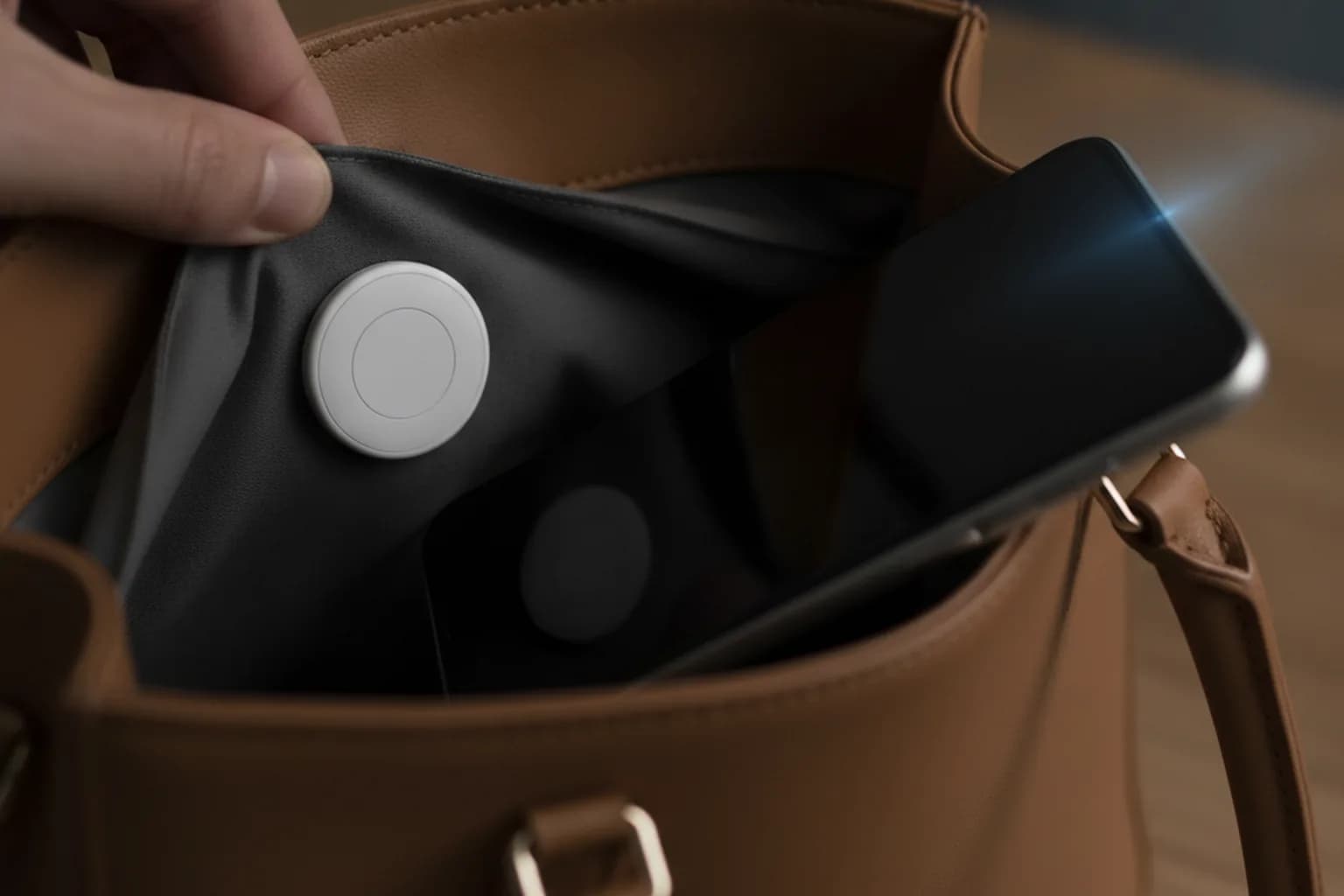
TL;DR: Bluetooth trackers like the Apple AirTag, Samsung Galaxy SmartTag and Chipolo are made to find keys and bags, but they can be slipped into your things to track you in secret. You can catch a planted tracker: an iPhone shows a "Found Moving With You" alert, and Android has built-in unknown-tracker alerts plus Apple's Tracker Detect app. Since 2024 Apple and Google share the DULT standard, so an iPhone spots a rogue Android tag and Android spots a rogue AirTag. If you find a suspicious disc, play its sound, read its serial number, and if you feel threatened contact the police and keep the device as evidence. A VPN won't stop a physical tracker, but it does shut down digital tracking — by IP address, MAC address and photo geotags.
How Bluetooth trackers become a stalking tool
A Bluetooth tracker is a coin-sized tag with a battery and a Bluetooth Low Energy (BLE) radio. On its own it only knows it is near some phone. The magic comes from crowd-sourced finding networks: Apple's Find My and Google's Find Hub turn hundreds of millions of other people's phones into relays. When any phone in the right ecosystem walks past a lost tag, it anonymously reports the tag's location to its owner. That is why an AirTag can show its position even when you carry it hundreds of miles from its owner.
The same technology makes a tracker a convenient stalking device. A tag is dropped into a bag lining, an inside pocket, or under a car bumper, and the person carries the "bug" without knowing. Unlike a classic GPS beacon, a Bluetooth tracker is cheap, needs no SIM card, and runs about a year on a single battery. Typical abuse scenarios:
- a jealous partner or ex who wants to know where you go;
- a stalker mapping a victim's routine;
- setting up a theft: a tag hidden in an expensive bag or car to find where you leave it;
- monitoring an employee or family member without their consent.
It matters to separate legal from illegal use. Tracking your own things — keys, a suitcase, a bike — is fine. Secretly tracking another adult without their knowledge is stalking, and in many places it is a crime.
Signs a rogue tracker is near you
Tracking with a tag is nearly invisible, but a few signals should raise a flag:
- your phone showed an alert like "Unknown tracker found near you" or "AirTag Found Moving With You";
- a faint chirp comes from your bag, jacket or car — a tag separated from its owner sounding off;
- you found an unfamiliar disc or fob among your belongings;
- the same unknown Bluetooth device keeps showing up nearby and "travels" with you;
- someone knows exactly where you have been without you telling them.
No single sign proves you are being tracked, but together they are a reason to check your things and your phone.
How to find a rogue tracker on your phone
The good news: since 2024 Apple and Google agreed on a shared alert standard, so modern phones detect rogue tags automatically — no matter which ecosystem the tracker belongs to. But each platform has quirks, and a manual check can be more reliable than the automatic one.
On iPhone (iOS)
An iPhone constantly scans the air and, if a "foreign" tag rides with you long enough, shows a "Found Moving With You" alert. Step by step:
- open the alert — the system offers to play a sound so you can locate the tag physically;
- if the tag has NFC (like an AirTag), hold the top of your iPhone to it — a page opens with part of the serial number and disable instructions;
- check manually in the Find My app → the Items tab, which shows objects moving with you;
- a tag long separated from its owner starts chirping on its own (Apple has shortened this interval over time so a victim learns sooner).
On Android
Android 6.0 and newer has built-in "unknown tracker alerts." If a rogue tag moves with you, the system warns you. There is also a manual scan and apps:
- open Settings → Safety & emergency → Unknown tracker alerts (the path varies by phone) and run a manual scan;
- install Apple Tracker Detect from Google Play — it scans the air for Find My-compatible tags that are away from their owner and can play a sound when one is found;
- use Google Find Hub to scan nearby Android-ecosystem tags;
- for ongoing protection, a reputable mobile security app now warns not only about spyware but also about planted BLE tags.
Trackers and automatic alerts: what actually fires
The DULT standard (Detecting Unwanted Location Trackers) bridged the ecosystems: an iPhone reacts to rogue Android tags, and Android reacts to rogue AirTags. Makers including Chipolo, eufy, Jio, Motorola and Pebblebee committed to it. But coverage depends on whether a given tag supports the standard. A rough guide:
| Tracker | Owner's ecosystem | Auto-alert on iPhone | Auto-alert on Android |
|---|---|---|---|
| Apple AirTag / AirTag 2 | Apple Find My | Built-in (native) | Yes (DULT) |
| Samsung Galaxy SmartTag | Samsung Find | Yes (DULT) | Yes |
| Chipolo, Pebblebee | Apple or Google | Yes | Yes |
| Google Pixel Tag / Find Hub | Yes (DULT) | Built-in (native) | |
| Tile and DIY BLE tags | Separate app | Limited | Limited |
The practical takeaway: a name-brand tag will most likely trigger an auto-alert, but a modified or homemade device may not. That is why the manual check still matters.
You found a suspicious tracker: what to do
If you are sure you are being tracked, act calmly and in order. Do not throw the tag away immediately if there is a real threat to your safety — it may serve as evidence.
- Document the find. Photograph the device and where it was hidden — this helps if you go to the police.
- Read the serial number. With an AirTag, hold an NFC phone to it — a page opens with part of the number and disable steps.
- Read the room. If you feel threatened by a specific person, don't disable the tag in front of them — get to a safe place first.
- Disable the tag. On most trackers you remove the battery: on an AirTag, press and twist the cover counter-clockwise.
- Contact law enforcement. In a real stalking case, file a report and hand over the tracker as evidence — a serial number can sometimes be tied to its owner.
- Check your phone. Alongside a physical tag, a stalker may have installed spyware (stalkerware) — scan your phone with a security app.
Physical vs digital tracking: where a VPN fits
Honestly: a VPN doesn't jam Bluetooth and won't stop a physical tag from relaying its location through other people's phones — it will not protect you from a planted AirTag. But tracking isn't only physical. Far more often you are followed in the digital field: by your real IP address, by your phone's MAC address on public Wi-Fi, by your advertising ID, and by the geotags a camera hides inside photo files.
That is where an encrypted tunnel works. LiMP VPN hides your real IP address and swaps it for the server's, so sites and ad networks can't stitch your visits into one profile. It's one line of defense against digital tracking — alongside stripping metadata and turning off ad tracking. Get to grips with the other layers too:
- how to stop phone tracking — trackers, spyware and permissions;
- MAC address and Wi-Fi tracking — how access points recognize your device;
- geotags in photos — how to strip coordinates from your shots;
- the advertising ID — how to turn off cross-app tracking;
- smartwatches and fitness bands — another Bluetooth source of data about you.
Why protection isn't absolute
Tracker alerts are a big step forward, but not a guarantee. Know their limits:
- a tag's speaker can be removed or taped over in a couple of minutes — then it won't give itself away with sound;
- homemade and modified BLE devices often don't support DULT, so no auto-alert fires for them;
- alerts have a delay: the system must confirm the tag is traveling with you, not just sitting nearby;
- on Android the warnings need Bluetooth and location switched on; with Bluetooth off, the protection doesn't work;
- newer tags (such as an AirTag 2 with a UWB chip) locate items more precisely — that same precision also helps a stalker.
So it's worth pairing the automation with a habit of periodically checking your belongings and running a manual scan.
Checklist: cut your risk of tracker stalking
- update iOS or Android to the latest version — unwanted-tracker protection improves with every release;
- keep Bluetooth and precise location on at least while traveling — without them auto-alerts stay silent;
- run a manual scan now and then: Find My → Items on iPhone, Unknown tracker alerts on Android;
- when uneasy, check your bag, pockets, stroller and car — especially linings and gaps;
- install a trusted security app that detects planted BLE tags;
- act on any unknown-tracker notification instead of swiping it away;
- close the digital tracking channels: strip photo geotags, turn off the advertising ID, and use a VPN on other people's networks;
- in a real threat, keep the tag as evidence and contact the police.
Frequently asked questions
Can an AirTag track me without internet?
The tag itself has no GPS and no SIM — it doesn't go online. Other people's phones passing by carry the signal: as soon as an internet-connected phone is nearby, it anonymously sends the tag's position to its owner. So the victim doesn't need their own connection — someone else's does the job.
Will an alert fire if I use Android but the tracker is an AirTag?
Yes. Thanks to the shared DULT standard, a modern Android warns about rogue AirTags just as an iPhone warns about rogue Android tags. You just need Bluetooth and location on and an up-to-date system.
What if I have an old phone with no auto-alerts?
Install a manual-scan app — for example Apple Tracker Detect for Android, or use the search in Find My on iPhone. A manual scan finds compatible tags nearby; repeat it if something feels off.
Does a planted AirTag beep on its own?
Yes — a tag away from its owner starts chirping periodically so it gets noticed. But don't rely on sound alone: an attacker may remove or tape over the speaker, so the electronic check matters too.
Does a VPN protect me from a Bluetooth tracker?
No. A VPN encrypts internet traffic and hides your IP, but it can't "see" or jam a physical tag's radio. A VPN handles the digital layer of tracking; against a tag you need your phone's alerts and a physical check.
Is it legal to track a person with a tag?
Tracking your own things is legal. Secretly monitoring another adult's movements without consent is stalking, and in many jurisdictions it's a crime. If you're a victim, document it and contact the police.
Can I just throw away a tag I find?
If there's no threat — yes, remove the battery and dispose of it. But in a real stalking case, keep the tag: its serial number can sometimes let police identify the owner, so it may be evidence.