

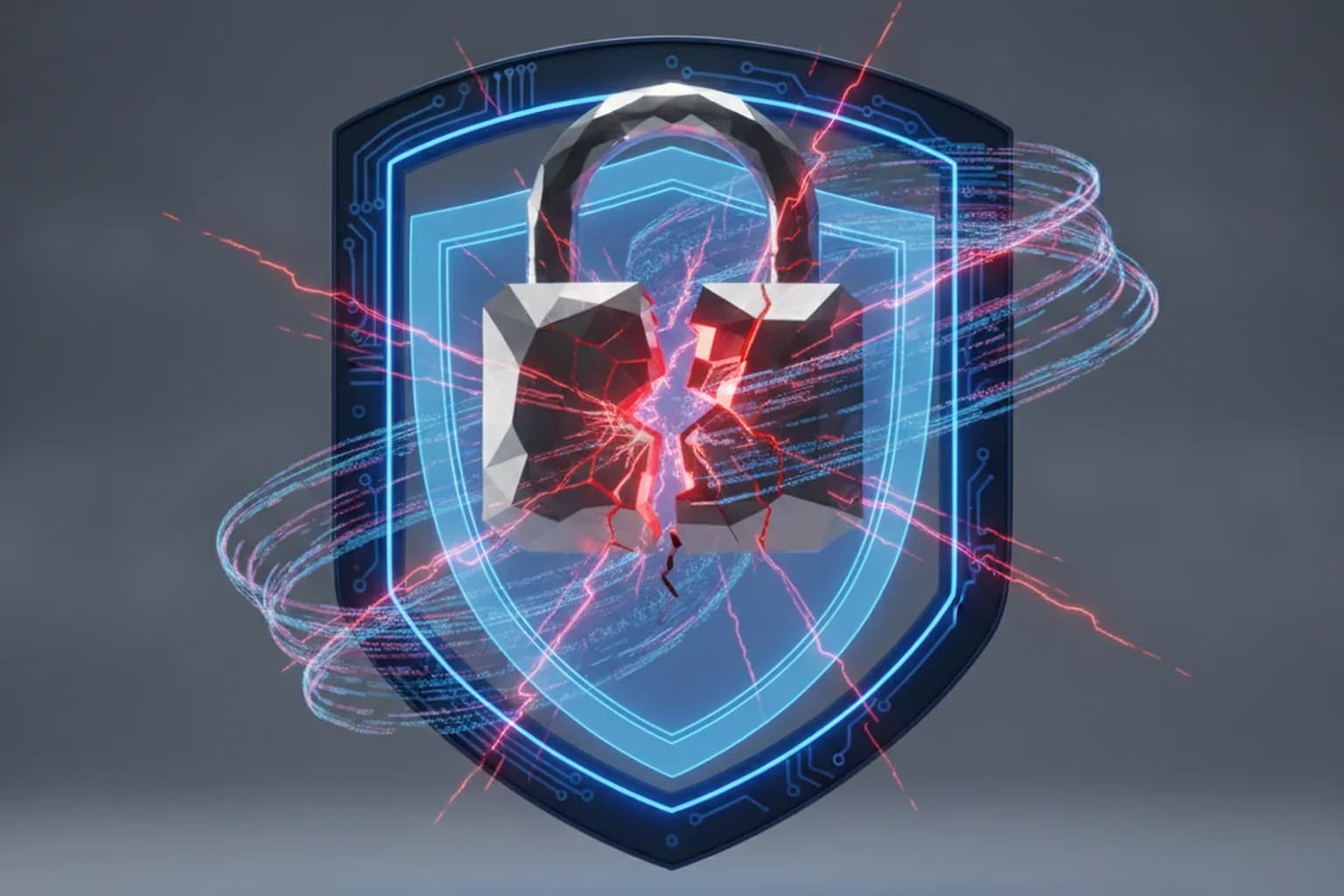
In short: A critical vulnerability, CVE-2026-16232 (CVSS 9.1), lets an unauthenticated attacker obtain a login token and sign into Check Point's SmartConsole with full administrator rights — no password needed. It affects the management servers that control corporate firewalls, it is already being exploited in the wild, and CISA added it to its catalog of actively exploited bugs on 22 July 2026. You cannot patch someone else's firewall, but you can harden your own devices and traffic.
What happened
Check Point, one of the largest firewall vendors in the world, disclosed a critical authentication-bypass flaw in the login process of SmartConsole — the management application administrators use to configure firewalls. Tracked as CVE-2026-16232 and rated 9.1 out of 10 on the CVSS scale, the bug lets a remote attacker with no credentials pull a service application token and then log in through SmartConsole with full administrative rights. The company confirmed the flaw is already being exploited against a small number of customers. For context on how quickly a single unpatched hole becomes an open door, see our report on Microsoft's record 570-bug Patch Tuesday.
Why this vulnerability is so dangerous
The flaw does not hit a single firewall — it hits the brain that controls them. The affected products are the Check Point Security Management Server and Multi-Domain Security Management Server, which push security policy to the gateways that guard a company's network. An attacker who logs in as administrator can change firewall rules, weaken or disable protections and open paths deeper into the infrastructure. Vulnerable versions span a wide range — R77.30, R80, R80.10 through R82.10 — so many long-running deployments are exposed. The risk is highest where the management server is reachable from the internet and accepts SmartConsole connections from any IP address rather than a fixed allowlist.
Already under attack
This is not a theoretical bug. The U.S. Cybersecurity and Infrastructure Security Agency (CISA) added CVE-2026-16232 to its Known Exploited Vulnerabilities catalog on 22 July 2026 and set a remediation deadline of 25 July — a signal that attacks are real and time-sensitive. Check Point urged customers to install the cumulative updates immediately (for example, Take 36 for R82.10, Take 118 for R82 and Take 158 for R81.20), restrict SmartConsole access to trusted IP addresses only, and review connection logs for a set of known attacker IPs and for logins that used the "application token" method.
Does this threaten your personal data?
Directly, this is a corporate-infrastructure problem — you cannot patch a firewall you do not own. But it matters to ordinary users in two ways. First, the companies that hold your data — banks, shops, service providers — sit behind exactly this kind of equipment; when their perimeter is compromised, your records can leak, as we saw in the billion-record credential leak. Second, it is a reminder that even security products from top vendors have critical holes, so no single layer can be trusted absolutely. The lesson is defense in depth: control the layers you actually own.
How to protect yourself
Keep every device patched. The same class of flaw — an attacker slipping in without valid credentials — exists on phones, laptops and routers too. Turn on automatic updates so a known, already-fixed bug does not stay open on your hardware.
Use strong, unique passwords and two-factor authentication. If a service you use is breached through its perimeter, unique credentials and 2FA limit how far the damage spreads to your other accounts.
Encrypt your traffic on untrusted networks. On public or shared Wi-Fi your data can be intercepted in transit regardless of any company's firewall. A VPN routes your traffic through an encrypted tunnel so others on the same network cannot read your sessions and passwords. LiMP VPN is a no-logs service for iOS and Android — see the features and plans, and more security news on our blog.
Sources
This report is based on coverage by SecurityLab, Help Net Security and The Hacker News, and on the CISA Known Exploited Vulnerabilities catalog entry, July 2026.