
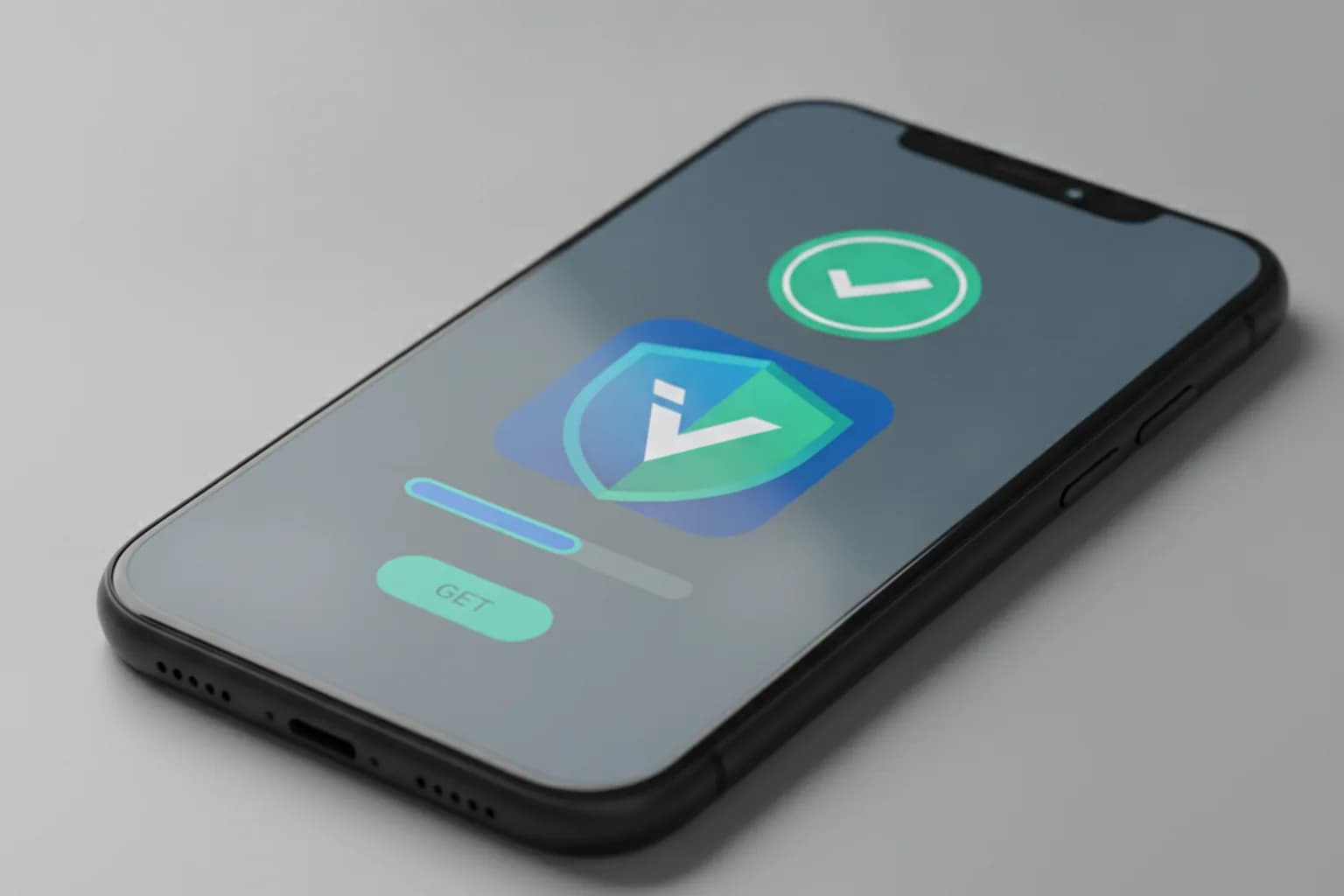
In short: Downloading a VPN safely means getting the app only from an official source: the App Store, Google Play (in 2026, look for the verified VPN badge), or the developer's own website. The real threat today is not the VPN itself but fake copies and APK files served through ads: attackers disguise password-stealing malware and banking trojans as privacy tools. Before you install, check the developer name, the requested permissions, and whether there is a privacy policy. Free turbo and mod versions from third-party stores are the riskiest route and are best avoided.
Why simply downloading a VPN became risky
A VPN is a security tool: it encrypts your traffic and hides your real IP address. The paradox is that the download step itself has turned into an attack surface. Attackers know people search for how to download a VPN in a hurry and while anxious about privacy, so they push a fake app that looks identical to the real one.
In 2026 Google publicly warned Android users about a surge of fake VPN apps, and security researchers repeatedly found counterfeit installers of popular services that dropped malware instead of protecting anything. Disguised as a VPN, attackers most often deliver:
- infostealers that harvest passwords, session cookies, and autofill data;
- banking trojans that intercept banking apps and one-time codes;
- adware and trackers that flood the device with ads and sell your activity;
- remote access tools (RATs) that hand control of your phone to a stranger.
The key point: a real VPN protects your connection, but it cannot save you if you installed the infected app yourself. That makes the download step more important than it looks. If you want to understand how empty shells differ from honest services, see the breakdown of malicious VPN apps.
Where to download a VPN safely: official sources
The principle is simple: the app should reach your phone through a short, verifiable path from the developer to you, with no intermediate mirrors or file hosts. There are only three official sources.
App Store (iOS). Every app goes through Apple's review, and installation is only possible from the store, which already removes most of the risk. A VPN on iPhone works through a system configuration profile the app creates legitimately; the only danger is installing a profile sent to you by a link from an email or messenger.
Google Play (Android). In 2026 Google introduced a verified VPN badge — a label for apps that passed an additional authenticity and security review. If a VPN carries that badge, the odds of hitting a fake drop sharply. Android does technically allow installing apps from the side (sideloading), and that is exactly what attackers exploit, as covered below.
The developer's official website. A legitimate source, as long as you reached the site by typing its address rather than following an ad. This is usually where you grab desktop builds or a link to the right store. The official LiMP VPN apps are distributed only through the App Store and Google Play, and the website simply points you to them and to the Android page with a correct install path.
Here is how sources compare by risk, so it is clear why downloading an APK from a link and installing from Google Play are not the same thing.
| Download source | Risk level | Comment |
|---|---|---|
| App Store / Google Play (with badge) | Low | Store review and authenticity check; updates arrive automatically |
| Developer's official website | Low | Safe when reached by typing the address, not via an ad link |
| Third-party app store | High | No strict moderation; a common channel for counterfeits |
| APK from an ad or messenger link | Very high | A classic infection vector; authenticity is almost impossible to verify |
| Mod / cracked version | Very high | Code modified by someone with no guarantees; often bundled with malware |
Red flags of a fake VPN app
A counterfeit often gives itself away before installation — on the store page or the website. Be wary if you see even one of these signs:
- Unnecessary permissions. A VPN does not need access to your contacts, SMS, microphone, camera, or gallery. Requesting those rights is the strongest warning sign.
- Aggressive ads and pressure. Pop-ups urging you to install now, countdown timers, loud promises of total anonymity and unlimited free everything.
- Vague developer. No clear company name, website, or support contact; a recently created profile.
- Odd reviews. A wave of identical short five-star ratings, or the opposite — complaints about charges and ads.
- No privacy policy. An honest service always documents what data it collects and whether it keeps logs.
- The app has not been updated in a long time. An abandoned VPN means security holes and a reason to doubt the developer.
How to verify an app before installing
Even when an app sits in an official store, spend a minute checking it — that is cheaper than cleaning a trojan off your phone later.
Match the developer name. Open the publisher profile and confirm the name matches the one on the service's official website. Fakes often copy the icon and name but are published from an unrelated account.
Look for the verified VPN badge. In Google Play it confirms the app passed an extra check. It is not a hundred-percent guarantee, but a meaningful boost to trust.
Read the privacy policy and log claims. A genuinely private service explains that it keeps no records of your activity. How to test that in practice is covered in the guide on verifying a no-logs VPN.
Check the update history and permissions. Regular updates and a minimal set of rights signal a living, honest product. If you are unsure about the service itself, the guide to choosing a VPN will help.
Why free and mod versions are especially dangerous
A free VPN still costs money — you just do not pay directly. Server infrastructure and encryption are expensive, so some free apps earn from the user: they embed third-party trackers, collect and resell traffic data, and show intrusive ads. A noticeable share of free VPNs contains third-party analytics, and some contain outright malicious code. That does not mean every free service is a virus, but the risk here is objectively higher. The difference in approach shows clearly in this honest free vs paid VPN comparison.
A separate trap is the mod APK and cracked premium version. They are pitched as a way to get paid features for free, but in reality you install code someone modified, bypassing the store and any review. Those files are the ones most often infected. A real VPN uses modern protocols — WireGuard (ChaCha20-Poly1305 encryption), OpenVPN, or IKEv2 (AES) — and you can only get them safely from the official app, not from a shady build.
Checklist: download a VPN without catching a virus
- Download only from the App Store, Google Play, or the developer's official website.
- In Google Play, check for the verified VPN badge.
- Match the publisher name against the company on the official website.
- Refuse to install if the app asks for access to contacts, SMS, camera, or microphone.
- Do not install APKs from ad, email, or messenger links, and avoid mod versions.
- Read the privacy policy and the no-logs statement.
- After installing, confirm the server list is real rather than decorative, and set up the connection using the guide for Android or iPhone.
- If you want a predictable, verifiable service with no hidden monetization, check the LiMP VPN pricing.
Frequently asked questions
Can I download a VPN outside the app store?
From the developer's official website, yes — that is a legitimate source, especially for desktop builds. The danger is not websites as such but random APK files and mirrors linked from ads or chats: their authenticity is almost impossible to verify.
What does the verified VPN badge in Google Play mean?
It is a label introduced in 2026 showing that an app passed an additional authenticity and security review. The badge raises trust but does not replace the basics — you should still check the developer name and the requested permissions.
Are all free VPNs dangerous?
No, but the risk is higher. Many free apps monetize through user data and ads, and some carry trackers or malicious code. If privacy matters, a paid service with a transparent policy is more reliable.
How do I tell that an installed VPN turned out to be fake?
Indirect signs: fast battery drain, ads popping up outside the app, new unknown permissions, no real server list, and strange account behavior. If you suspect it, remove the app and change important passwords.
Do I need an antivirus if I am downloading a VPN?
A VPN and an antivirus solve different problems and complement each other: one protects the connection, the other protects the device from malicious files. When installing apps from unverified sources an antivirus does not hurt, but the best method is to avoid dubious files entirely.
Why does a VPN on iPhone ask to install a configuration profile?
It is a standard iOS mechanism: the VPN app creates a profile to route traffic. The only catch is that you should install the profile the App Store app itself creates, not a file someone sent you by link.